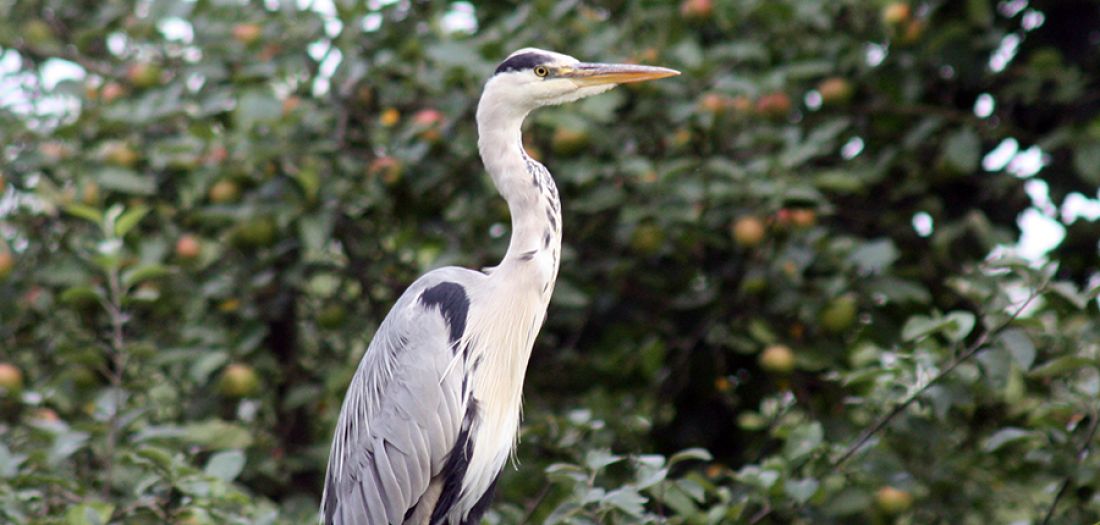
Attracted by the rich food supply more and more grey herons breed year after year in the zoo. In 2004 there were 34 couples. In 2016 already 123 nests were counted. As a result the colony grew up to about 720 birds with a rising trend.
However the birds usually do not find their main food in the zoo but at the river Neisse or at ponds. Their heavy nests and the faeces become more and more problematic for our trees.
Kategorie: Vögel
Größe: beak to tail 90-98 cm; wingspan 170-195 cm
Brutdauer: 25-28 days
Lebensalter: 25 years old
Geschlechtsreife: with 2 years
Reproduktion: 3-5 eggs
Nahrung: fish, amphibians, mice, insects
Lebensraum: flowing and still waters rich in fish and sea coasts with old trees
Gefährdung: not endangered
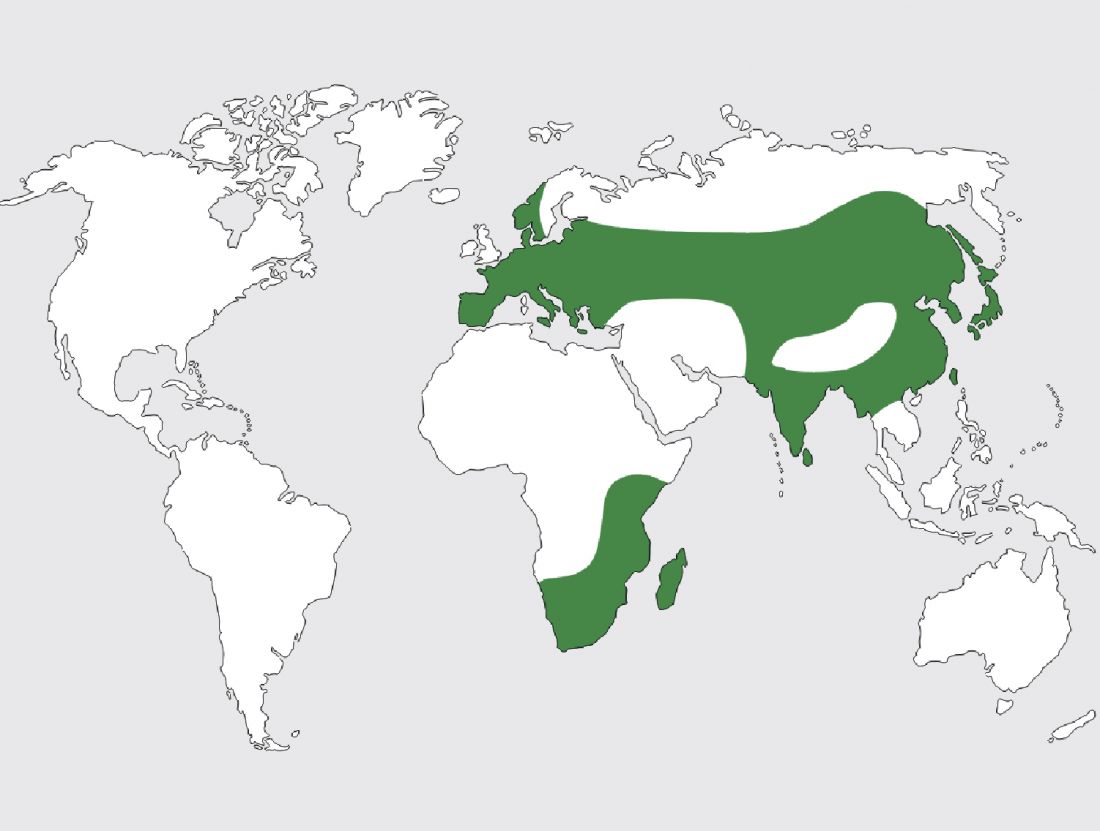
Verbreitungsgebiet: